Food System Asset Mapping Working Group

From collaboration to a shared resource. The Edmonton Food Resource Map grew from a shared question: How can we make the food resources that already exist in our community easier to find, understand, and share?

What we’ve done
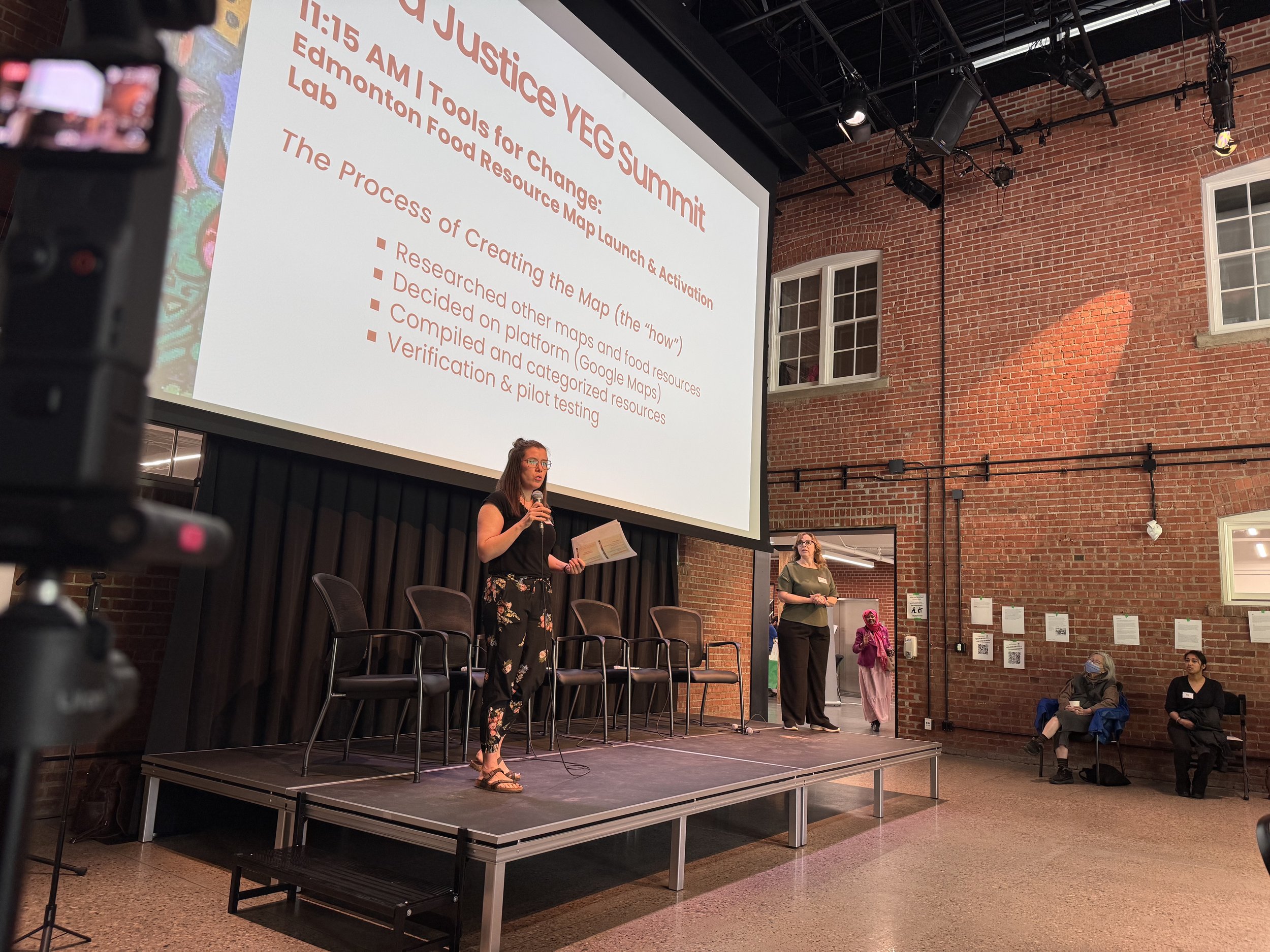
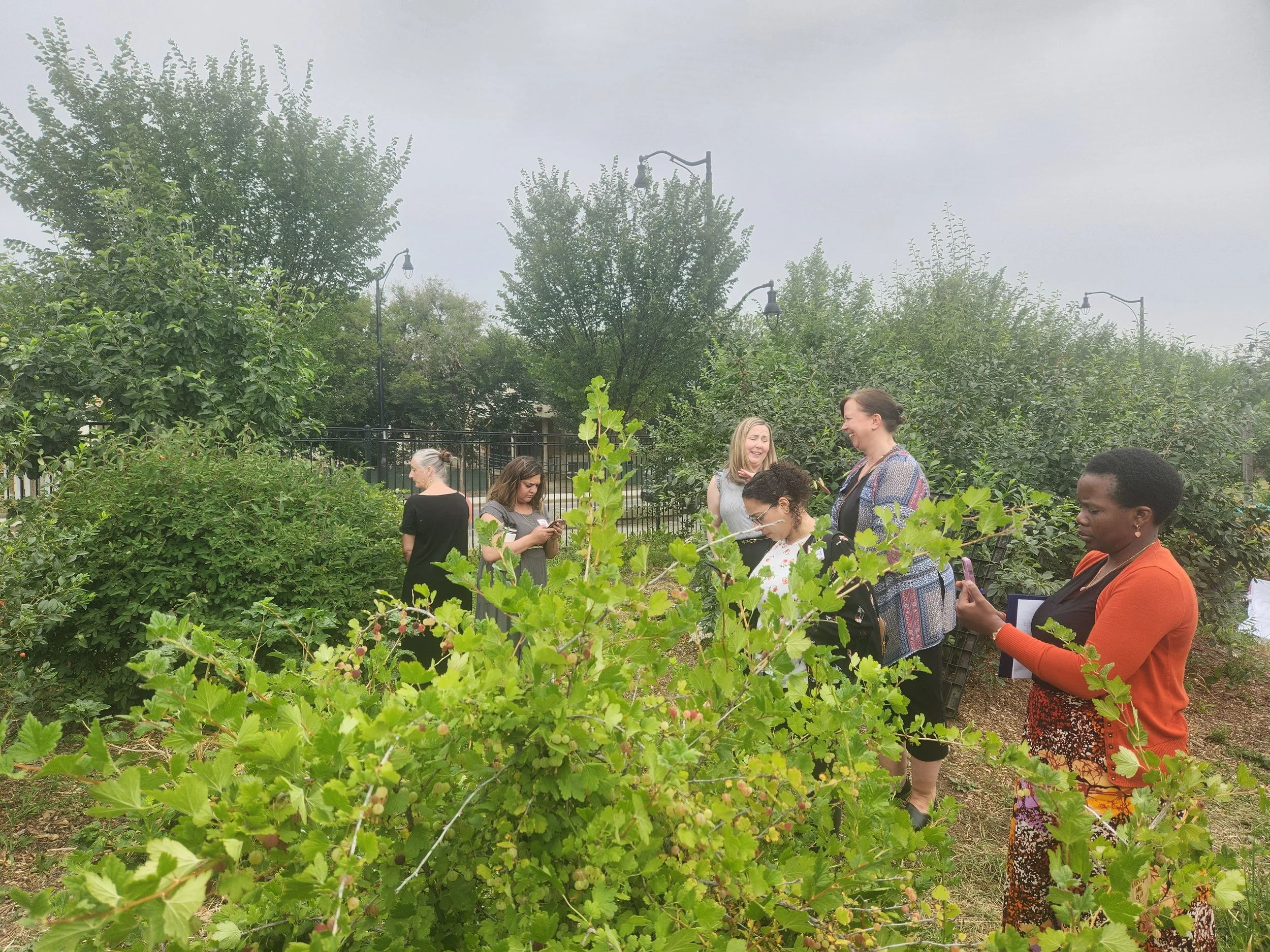
Over the course of the project, this working group engaged 13 people across 9 contributing organizations. Early sessions focused on establishing a baseline of existing data, mapping local initiatives, and building on systems already in place.
Through collaboration, research, data collection, community engagement, and many conversations, the Working Group developed the Edmonton Food Resource Map — an interactive resource to help community members and frontline workers find food resources across Edmonton.
The project phase has now concluded, and the map has launched.
But the work does not end with the launch. We see the map as a living resource that can grow and improve through community knowledge, feedback, collaborative updates, and ongoing stewardship.
Why did we create a food resource map?
Edmonton has many organizations, programs, businesses, community initiatives, and informal networks that contribute to food access and food security. Yet knowing what exists or still exists, where it is, who it serves, and how to access it is not always easy. Since COVID, many programs have changed or closed, while food insecurity and requests for support have increased. For community members, navigating food resources can be challenging — especially when transportation, cost, eligibility, language, cultural food preferences, or other barriers are involved. For frontline workers and community organizations, it is also difficult to maintain a clear picture of the resources available across the city. We wanted to make this information easier to find.
Our hope is simple:
to make existing food resources more visible and easier to navigate, while helping strengthen connections across Edmonton’s food system.
A collaborative journey
This map was not created by one organization or one person. It grew from people and organizations who shared their knowledge, experiences, questions, resources, and time. Working Group representatives brought different perspectives from across Edmonton’s food system.
Together, we considered questions such as:
What kinds of resources should be included?
What information would be most useful and should be prioritized for end users when building the map database?
How can we make the map accessible and practical?
How do we balance useful detail with a tool that is simple to navigate for our end users?
How can we verify information and reduce outdated or incorrect listings?
What would it take to keep a resource like this useful beyond the initial project timeline?
We are grateful to everyone who contributed to this process — including Working Group representatives, community organizations, frontline workers, partners, and others who shared their knowledge and feedback, helping us answer those questions to the best of our abilities. The map is a shared product of this collective effort.
Who was involved?
The Edmonton Food Resource Map Working Group was part of the broader Food Security and Food Justice Ecosystem of Edmonton (FSFJE).
This collaborative approach was important. Food security is complex, and no single organization sees the entire food system.
Bringing people together allowed us to learn from one another, identify different perspectives and experiences, and build a resource that reflects a broader view of food access in Edmonton.
We extend our sincere appreciation to Working Group core partner organizations who helped shape this work
We especially acknowledge Lindee from M.A.P.S. She played an integral role in developing the map and supporting the technical aspects. Without her, this map would not be the resource it is.
How was the map created?
Developing the Edmonton Food Resource Map was a process of learning, testing, listening, and refining.
1. We learned from existing work
We researched and looked to other communities and projects for inspiration and guidance, including food asset mapping initiatives in Vancouver, Strathcona County, and the work of Simon Fraser University’s Food Systems Lab. Rather than starting from scratch, we wanted to learn from what others had already tried — including both opportunities and challenges.
2. We defined the purpose and scope
The Working Group explored what the map should accomplish, who it should serve, and what kinds of food resources should be included and prioritized. We worked to balance a broad view of Edmonton’s food system with the need for a tool that would remain practical, accessible, and manageable.
3. We gathered and organized information
Working Group members and partners contributed information about food resources across Edmonton, pulling together a snapshot of data in time. The information was organized into categories to help users navigate different types of resources.
4. We verified and refined the information
We reviewed information, reduced duplication, clarified resource details, and improved the usefulness of individual listings. But this process also highlighted an ongoing challenge: a map is only as useful as the information it contains — and that information changes.
5. We listened and adapted
We considered feedback from service providers and others connected to Edmonton’s food system. Based on feedback from our prototype testing, we made changes to design features. For example, changes were made to the Online & Phone Resources — No Physical Location layer, such as placing these resources in the river area of the map, rather than in a neighbourhood or at a street address, to show they are not walk-in locations.
6. We launched the map
The Edmonton Food Resource Map launched in June 2026.
Since then, the map has connected thousands of people with food resource information across Edmonton and includes more than 250 resources. The launch was an important milestone — and the beginning of the next stage: keeping the resource relevant, useful, and responsive to community needs.
The result: Edmonton Food Resource Map
What did we learn?
Creating the map showed us that mapping food resources is about more than putting information onto a map.
It is also about relationships, trust, coordination, information sharing, and understanding the realities of navigating Edmonton’s food system.
We also learned that maintaining a resource like this requires ongoing commitment.
Food programs change. New resources emerge while others close or evolve.
For the map to remain useful, it needs continued attention, crowdsourcing, and shared responsibility from the wider community in Edmonton, beyond those directly involved in the development stage.

Help us carry the work forward!
The initial project has ended, but we hope the Edmonton Food Resource Map will continue to live and evolve. The next chapter is about sustainability, stewardship, and collaboration. Despite financial constraints, we hope the map continues through annual updates (scheduled for spring/summer) to keep its information fresh and responsive to community feedback.
A Google Form is linked to the map’s landing page, where updates, suggestions, or impact can be shared with the working group for future updates. We also hope to keep learning from people who use the map.
What is missing?
What food resource has changed?
What is the impact of the map?
What is your comment or suggestion?
Your feedback can help shape future updates.
An invitation to the wider community
A resource like this is stronger when it is built and cared for together.
If you are a community member, cultural food store owner, community garden coordinator, frontline worker, organization, service provider, researcher, funder, or someone working to strengthen Edmonton’s food system, we invite you to help continue this work.
You can:
Explore the map.
Find and share food resources in your community.
Share the map.
Help someone else discover resources that may be useful to them.
Tell us what is missing or needs updating.
Suggest a resource, update information, or share feedback.
Collaborate with us.
Bring your knowledge, ideas, and connections to the ongoing conversation about food access and food justice in Edmonton.